By Scott Aurnou
‘Phishing’ attacks are designed to steal your personal, financial and/or log in information. This can be done in a few ways, including via email or text message (referred to as ‘smishing’). They often contain links to websites that look legitimate but are really there to steal your account log in information or host malware ready to attack your computer as soon as you click on the link. These emails and messages can also be used to lure you into contact with scam artists posing as potential clients or officials offering to release substantial funds to you if only you would be so kind as to give them detailed personal information and/or a sum up front. Phishing attacks are generally designed to make you take action by either frightening or tempting you. Some of them are actually very well crafted. Some not so much. And some border on the ridiculous. Each month at The Security Advocate, we will present a few examples, along with explanations of what to look out for to avoid falling victim to one of the scams.
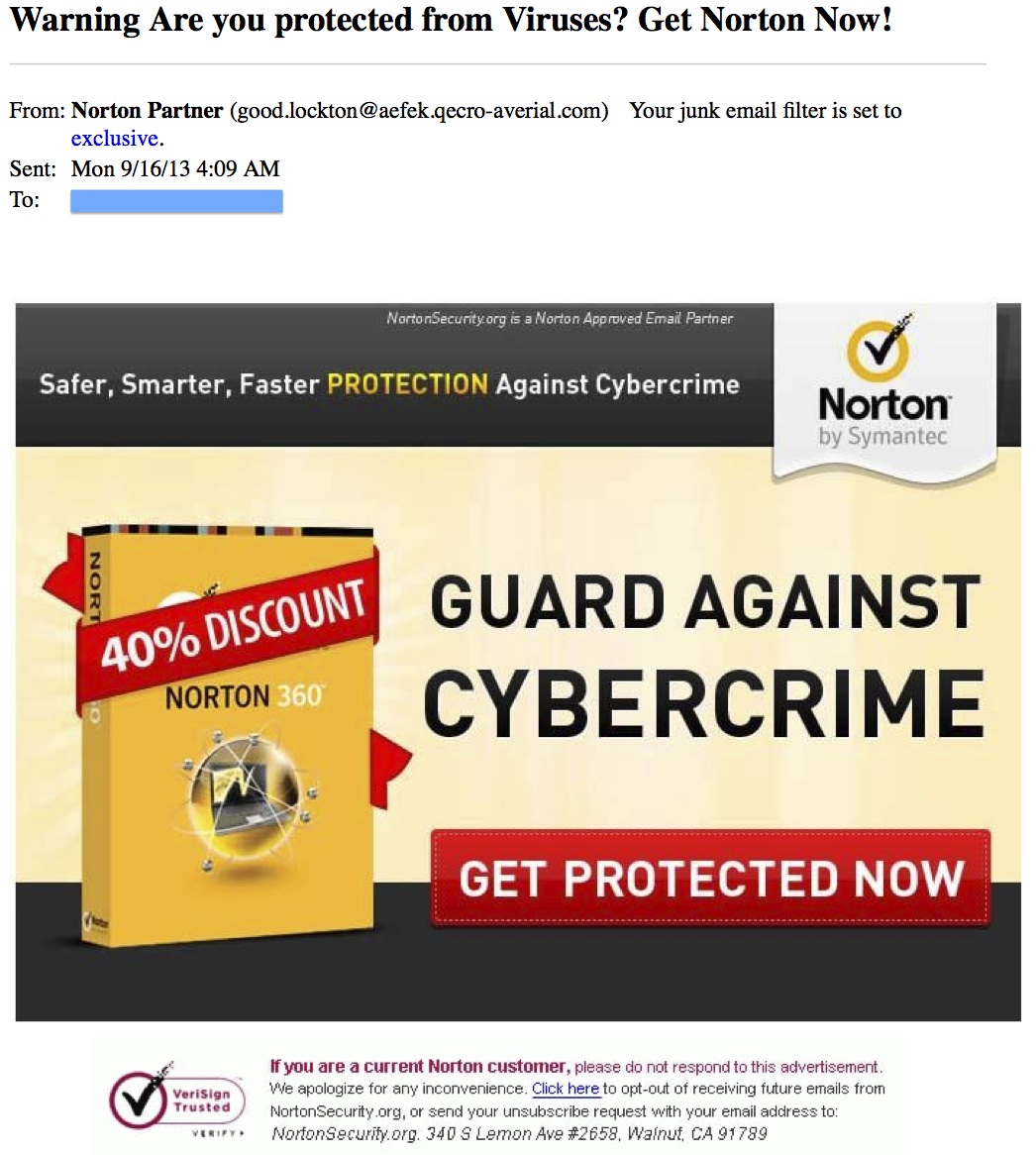
An email like this one, with the subject line ‘Warning Are you protected from Viruses? Get Norton Now!‘ paints an alluring picture, but that’s all it is: a picture. And it has nothing at all to do with the real Norton or the VeriSign logo at the bottom left of the image. It’s no different than if you took a picture of a Pepsi bottle and sent it to someone else yourself while pretending that it was coming from PepsiCo directly. As for the Norton angle… many attacks masquerade as ‘security’ software with the intent of scaring you into buying ‘protection’ from a non-existent threat, allowing the scammer to remotely access your computer to ‘fix’ the ‘problem’ (and potentially steal your data and/or leave you a lovely malware-laden parting gift), or simply take you to a website to trick you into giving up your personal and financial information. Also, don’t get thrown off by vaguely legitimate-sounding sender’s name – like ‘Antivirus Deals’ or ‘Norton Partner’ – especially if it doesn’t match the sender’s email address. This generally indicates an automated message sent via a botnet solely to attack the recipient of the message. The vast majority of spam emails come from computers under the commend of a botnet.
Read more ›


